
Look carefully at the image above. You’ll see a stone coffin, with some ornate carvings being slowly consumed by ivy, perched high on an old wall. A wall which marks the boundary between the church graveyard and the garden of the house next door. “Have you seen the witches coffin?” my Mum remarks as we walk past the graveyard on another of our lockdown walks. This is a path I’ve of trodden hundreds of times, how is it possible I’ve paid this no heed before? Does it contain the remains of some poor soul deemed unfit to be buried in the graveyard? Is it a really a witches grave? Read on to find out…
This blog was a rather thoughtful Secret Santa gift from my husband’s cousin. A way to share our Canadian adventure which, from the view point of Christmas 2019, seemed so close I could almost smell the maple syrup! Briony, the gift-giver, a fellow Wurzles-loving cider-drinking West Country aficionado had, I felt, chosen a great name. In fact, back in 2012 I had a short lived travel blog with a similar name, ‘West Country Kid’, so I was chuffed with the gift and ready to write.
Needless to say, finding ourselves without somewhere to live during a global pandemic did not leave me time, or a burning desire, to document. Neither did moving into my Mum’s house, husband, dog and suitcases in tow, to wait out the pandemic and plot a route to Canada.
I thought I knew all the secrets of the small English village we found ourselves walking around, killing lockdown time, but I was wrong. I didn’t foresee West Country Wanderings actually being exactly what I’d write about first, but 2020 isn’t working out the way anyone planned is it?
The Medieval Well
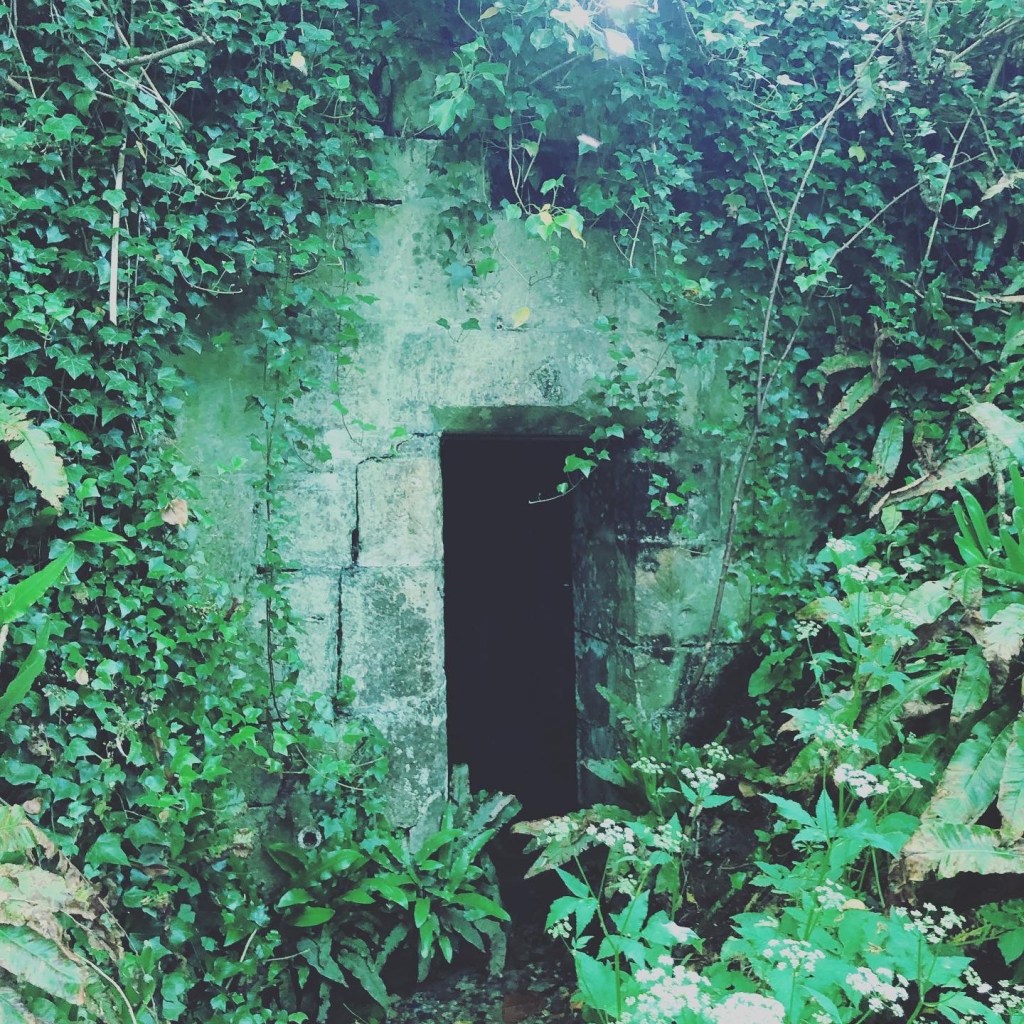
The one time track is now entirely covered in stinging nettles and so the first time the three of us attempt to reach the 15th Century Well Jacob, who would rather be stung than defeated, was the only one who made it there.
I returned, alone, determined and welly-clad the next day. The well isn’t actually far from the main road, in a small dell. But,once you’re a few meters along the once-was-a-path, amongst the trees, it’s actually rather eerily quiet. The stone structure is built into the side of a bank, inside there is a stone trough which the water collects in and, to complete the scene, there is a small stream flowing out of the building.
Thanks to the lack of modern surroundings, it’s not hard to picture the Monks, who would have come from the Priory of the Bonhommes, before the Break with Rome, to collect water. I didn’t stay long, but did find a small, broken piece of clay pipe in the stream before I left. And as I pass back through the little green valley, back into the modern world, I can just make out a young girl, bonnet on, dress gently dragging on the ground, sent out to fetch water from the near-by, now lost after a fire in 1928, Conduit Cottages.
The coffin on the Cemetery Wall
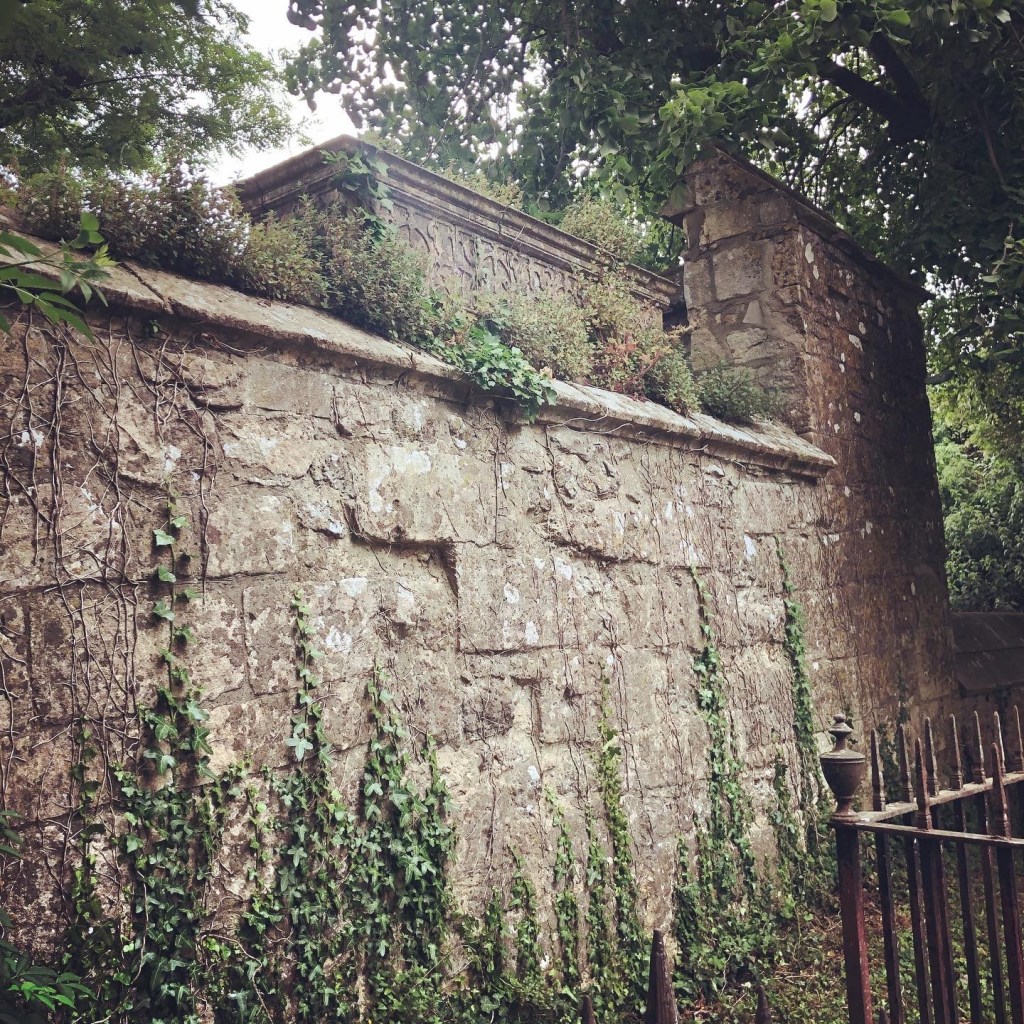


The coffin sits rather precariously on top of the high church wall. Even without knowing whose remains lie inside and why they were deemed to be unworthy of burial inside the graveyard you’re chilled by the notion that anyone should remain in limbo, suspended on a wall.
Google throws little light on the subject. One photograph of the coffin shared and discussed on Blipfoto mentions the idea that it houses an excommunicated Monk. Elements of this story work: there certainly were Monks living in the Priory House but the coffin is quite small, even for one of our much shorter ancestors.
A further comment suggests it is the resting place of a slightly eccentric lawyer who had wanted to be placed on the wall and obtained permission. So is this a story of status and remaining above others or rather different from others, even in death? The likelihood is not.
If you’ve every read Tess of the d’Ubervilles, or a least the part where she buries her unbaptised child in a forgotten corner of the cemetery, you might already have worked out why the coffin is there. As unbaptised babies were not allowed to be buried in the consecrated ground of the church yard, they were placed, often by desperate unmarried mothers, as near as possible. In this its case on the top of a wall.
I won’t go as far as to say I’m glad that the global situation has forced me to explore, admire and write about Edington; but I will cast my eyes up at the coffin on the wall and smile. And hopefully, at some point soon, that will be the smiling face of someone visiting from Canada.

 West Country Wandering